

Tips for Buying Quality Clothes on Budget
Table of Contents
- Set a Realistic Clothing Budget and Plan Your Purchases
- Audit Your Closet Before You Buy Anything New
- How to Tell If Clothes Are Good Quality
- Best Fabrics for Durable Clothing
- Choose Versatile Basics That Mix and Match
- Building a Capsule Wardrobe on a Budget
- Thrift Shopping Tips for Clothes
- Find Sales, Discounts, and Use Coupon Codes
- Frequently Asked Questions
Last Updated: October 11, 2026
Set a Realistic Clothing Budget and Plan Your Purchases
Learning tips for buying quality clothes on budget starts with a clear spending limit. Without one, impulse purchases derail your goals.
Decide your monthly or quarterly budget, $50-150 per month works for most people, depending on lifestyle and needs.
Plan ahead with a shopping list based on actual needs. This shift from reactive to planned purchasing cuts waste dramatically.
Break your budget into categories:
- Basics and essentials (underwear, socks, undershirts)
- Work or everyday wear (pants, neutral tops)
- Seasonal pieces (jackets, summer clothing)
Audit Your Closet Before You Buy Anything New
Before buying, audit what you own. Many shoppers waste money on duplicates or pieces that don't work together.

Set aside an hour to audit your closet. Pull out everything and sort by category: tops, bottoms, dresses, outerwear.
Ask yourself these questions for each item:
- Have I worn this in the past year?
- Does it fit comfortably right now?
- Does it work with at least three other pieces I own?
Items that fail these tests should go. Donate, sell, or recycle them.
After auditing, you'll know exactly what gaps exist, maybe five tops but only two pairs of pants.
How to Tell If Clothes Are Good Quality
Quality matters more than quantity on a budget. A well-made piece lasts years; cheap pieces fall apart in months.
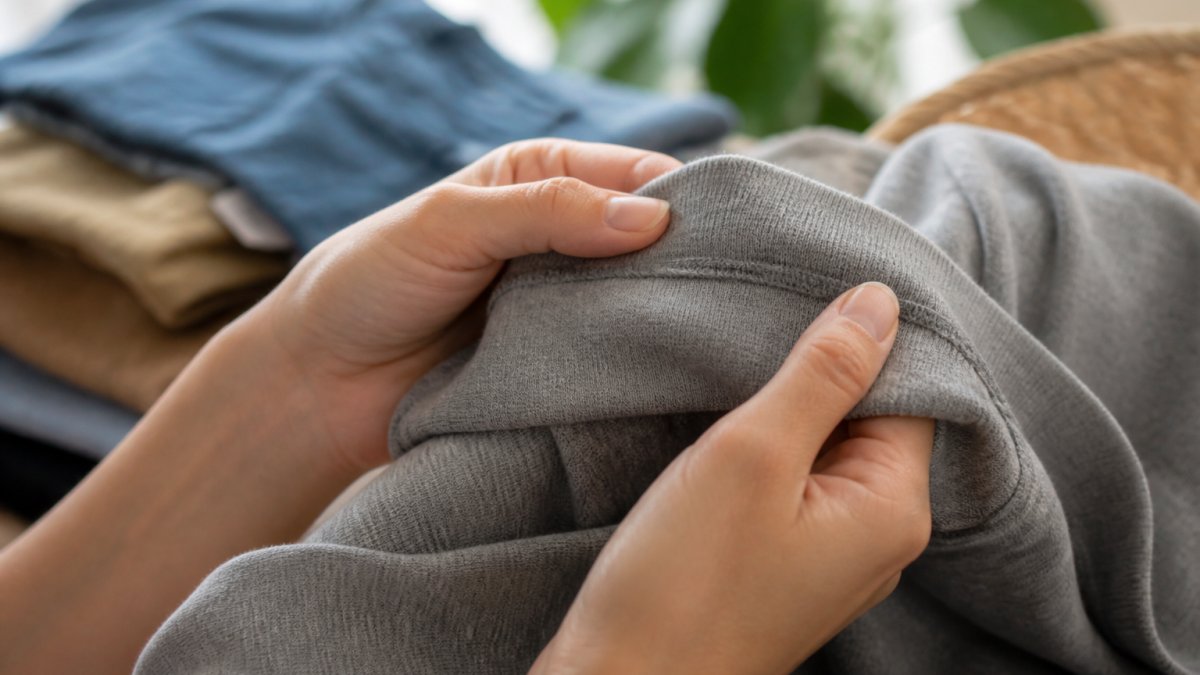
The In-Store Quality Inspection Checklist
Use this checklist every time you try on a piece. Go through each point systematically.
Fabric and Weight
- Read the fiber content label. Note the percentage of natural fibers (cotton, wool, linen) versus synthetics.
- Feel the fabric between your fingers. High-quality cloth feels smooth and dense; cheap fabric feels thin, rough, or papery.
- Hold the garment at arm's length. Does it drape well or look limp? Substantial fabric holds its shape.
Seams and Stitching
- Run your finger along all major seams (shoulders, sides, armholes). Stitching should be tight, even, and straight with no loose threads.
- Look at the inside of the garment. Seams should be finished, meaning raw edges are bound, serged, or covered. Unfinished seams fray and fail within a few washes.
- Check for puckering or waviness in seams, which signals poor construction or cheap fabric that shifts during sewing.
Hems and Edges
- Inspect the hem closely. It should be even, straight, and stitched securely with no loose threads or gaps.
- Check collar and cuff edges. These high-wear areas should be reinforced and finished cleanly. Fraying or loose edges mean the garment won't last.
- Look at armholes and necklines. They should be smooth and finished, not raw or rough.
Hardware and Closures
- Test every zipper. It should glide smoothly without catching, sticking, or grinding. A rough zipper indicates poor quality and will fail with regular use.
- Check all buttons. They should be sewn securely with reinforced stitching on the back. Wiggle each button, it shouldn't move or feel loose.
- Inspect buttonholes. They should be reinforced with tight, neat stitching. Loose or uneven buttonholes tear easily.
- If the garment has snaps or hooks, test them. They should feel secure and not bend or flex.
Fit and Construction Details
- Try the garment on and move around. Does it restrict movement or pull at seams? Poor fit stresses seams and causes premature failure.
- Check for symmetry. Sleeves should be the same length, patterns should align at seams, and the garment should hang evenly.
- Look at the inside construction. Quality garments often have a lining or facing that's finished neatly. Cheap garments have visible, rough interior construction.
- Examine any decorative elements (embroidery, appliqués, topstitching). These should be even, secure, and well-executed.
Final Red Flags
- Loose threads anywhere on the garment
- Stains, discoloration, or damage that won't wash out
- Uneven dye or fading in unexpected areas
- Seams that pucker, gap, or feel fragile
Fabric Composition and Durability
Cotton is durable, breathable, and easy to care for. It holds up well to repeated washing.
Linen lasts for decades if cared for properly.
Wool resists wrinkles and holds its shape well. Quality wool garments can last 10+ years.
Blends can work well when they combine natural and synthetic fibers strategically.
Avoid pure polyester and cheap synthetics. They wear thin, pill easily, and don't breathe well.
Best Fabrics for Durable Clothing
Choosing the right fabric extends how long clothes last. Some materials naturally resist wear better than others.
Cotton: Durable and breathable; look for thread count of at least 200. Linen: Lasts decades but wrinkles easily. Wool: Resists wrinkles and lasts 10+ years; avoid thin, scratchy varieties. Blends: Cotton-polyester gains durability while keeping breathability. Avoid: Pure polyester and cheap synthetics; they pill and wear thin quickly.
Choose Versatile Basics That Mix and Match
Following tips for buying quality clothes on budget means every piece should work with multiple others, multiplying outfit options without multiplying spending.
Focus on neutral basics first:
2021 New Summer 100% Cotton Solid Shorts Men High Quality Casual Business →
- White and black t-shirts
- Dark jeans (navy or black)
- Gray or beige pants
- Neutral sweaters (black, gray, cream, brown)
These basics pair with almost everything. One white tee works with five different bottoms. One pair of dark jeans works with ten different tops.

Add one or two colored or patterned pieces per season. These work with basics to multiply outfit combinations.
Building a Capsule Wardrobe on a Budget
A capsule wardrobe is a small collection of pieces that all work together. Start with basics, then add strategically: choose a 3-4 color palette, buy only lifestyle-appropriate pieces, ensure every new item works with at least 3 existing pieces, and avoid trendy items.
Prioritize pieces that fit your lifestyle. Spread purchases across months to avoid overspending and test what works.
Thrift Shopping Tips for Clothes
Thrift stores offer quality pieces at a fraction of retail prices. Inspect carefully for stains, tears, and broken zippers; test closures and smell for odors. Use the inspection methods above to spot quality. Shop regularly, inventory changes constantly. Don't assume thrift items are cheaper; price them against retail, as some stores overprice vintage or designer labels.
Find Sales, Discounts, and Use Coupon Codes
Smart shopping during sales saves 20-50%, but discounts alone don't guarantee value. The real skill is comparing true lifetime cost, not just the price tag.
Cost-Per-Wear: The Real Measure of Value
Cost-per-wear is a simple calculation that reveals whether a purchase is truly budget-friendly.
The Formula: Cost per wear = (Purchase price + Estimated repair/care costs) ÷ Estimated number of wears
Real Example: Jeans
Compare two options:
Option A: Budget jeans on sale
- Sale price: $25 (originally $40)
- Expected lifespan: 40 wears before significant fading, fraying, or fit issues
- Repair costs: $0 (you'll discard them)
- Cost per wear: $25 ÷ 40 = $0.63 per wear
Option B: Quality jeans at full price
- Full price: $85 (no sale)
- Expected lifespan: 200+ wears over 3-4 years with proper care
- Repair costs: $15 (one hem adjustment after initial wear)
- Cost per wear: ($85 + $15) ÷ 200 = $0.50 per wear
The higher-priced jeans are actually cheaper per wear, even without a discount.
Real Example: Cotton T-Shirts
Option A: Fast-fashion basics, 3-pack on sale
- Sale price: $15 for three shirts ($5 each)
- Expected lifespan per shirt: 30 wears before pilling, fading, or shrinking
- Repair costs: $0
- Cost per wear per shirt: $5 ÷ 30 = $0.17 per wear
Option B: Premium basics, single shirt
- Full price: $28 per shirt
- Expected lifespan: 150+ wears over 2-3 years
- Repair costs: $0 (quality basics rarely need repair)
- Cost per wear: $28 ÷ 150 = $0.19 per wear
They're nearly identical in cost-per-wear, but the premium shirt requires buying fewer replacements, saves closet space, and reduces waste.
How to Estimate Lifespan and Wear Frequency
Estimate how often you'll wear it:
- Daily wear items (work pants, everyday tees): 250+ wears per year
- Regular wear (weekend jeans, casual sweaters): 100-150 wears per year
- Occasional wear (blazers, dressier pieces): 20-40 wears per year
- Seasonal items (winter coats, summer dresses): 30-60 wears per season
Estimate how long it will last:
- Budget fast-fashion: 20-50 wears before visible wear
- Mid-range quality: 80-150 wears with proper care
- High-quality basics: 150-300+ wears with proper care
- Premium investment pieces: 200-500+ wears with proper care
These estimates depend heavily on fabric quality, construction, and how you care for the garment. A well-made cotton shirt cared for properly lasts far longer than a cheap synthetic blend worn carelessly.
Strategic Discount Shopping
Now that you understand cost-per-wear, use discounts strategically:
End-of-season sales: Winter items drop in March, summer in September (30-50% off). Newsletters: Sign up for first-time (10-20% off) and regular shopper discounts. Coupon apps: Rakuten, Ibotta, and RetailMeNot combine with credit card cashback (2-5%). Price comparison: Use Google Shopping or CamelCamelCamel to confirm genuine deals. Flash sales: Set alerts but only buy if the item passes your cost-per-wear test. Avoid traps: Compare sale prices to competitors, not just crossed-out original prices.
| Strategy | Typical Savings | Frequency | Best For |
|---|---|---|---|
| End-of-season sales | 30-50% | 2× yearly | Seasonal items, basics |
| Newsletter discounts | 10-20% | Monthly | First-time and regular buyers |
| Coupon apps | 5-15% | Weekly | Any purchase |
| Price comparison | 10-25% | Per item | Finding best deals across retailers |
| Thrift shopping | 50-80% | Ongoing | Budget-conscious shoppers, vintage finds |
| Cashback rewards | 2-5% | Per purchase | Frequent shoppers |
Frequently Asked Questions
What should I look for to tell if clothes are well made?
Examine the stitching first, straight, tight seams without loose threads indicate quality construction. Check fabric weight and feel; natural fibers like cotton and linen typically last longer than thin synthetics. Look at hems and seams on the inside; they should be finished cleanly, not raw or fraying. Test zippers and buttons by opening and closing them smoothly. Quality clothes have reinforced stress points at armholes, crotch seams, and pocket corners. When shopping at Chrissy's Eye, you'll find garments built to last with attention to these details.
How can I make a small clothing budget go further?
Buy fewer, higher-quality pieces rather than many cheap items that wear out quickly. Prioritize versatile basics in neutral colors that mix and match easily, a well-made pair of stretch denim or cotton trousers at $53.99 works with dozens of tops. Shop secondhand and thrift stores for designer pieces at a fraction of retail cost. Calculate cost per wear: a $50 item you wear 100 times costs just $0.50 per wear. Build a capsule wardrobe of 20-30 essential pieces that coordinate together. Use coupon codes and shop sales strategically rather than buying full-price impulse items.
What fabrics last longest in everyday clothing?
Natural fibers generally outlast synthetics for everyday wear. Cotton is durable, breathable, and softens with washing, look for 100% cotton basics like the summer shorts available at Chrissy's Eye. Linen is exceptionally long-lasting and improves with age. Wool resists wrinkles and holds its shape well. For blends, look for high percentages of natural fiber mixed with small amounts of elastane for stretch and recovery. Avoid thin polyester and acrylic, which pill and lose shape quickly. Check fabric weight on product descriptions; heavier fabrics typically wear longer than lightweight ones.
Is it better to buy fewer, higher-quality clothes?
Yes. One well-made item you wear regularly offers better value than five cheap pieces that fall apart after a few washes. Quality clothes maintain their shape, color, and fit through many wash cycles, reducing the need for frequent replacement. A higher-quality garment may cost more upfront but spreads that cost across dozens or hundreds of wears. Plus-size shoppers and big and tall customers especially benefit from quality construction, which maintains fit and comfort over time. At Chrissy's Eye, our commitment to best quality at competitive prices means you get durability without overpaying.